

A family of businesses. A team that genuinely cares.
What makes We Do Your Group a great place to build a career.
What working here actually feels like, day to day.
Browse current vacancies across all group companies
Our process, step by step — so you know exactly what to expect.
How we invest in the people who join us.
What our culture looks like and how we use DISC profiling.
The story behind the group, the people who built it, and the standards we hold ourselves to.
From a single business to a family of companies — here’s how we got here and where we’re headed.
What we’re building, why we’re building it, and the principle that sits behind everything we do.
Six values that shape how we hire, how we work, and how we look after the people around us.
The people behind the group — from the leadership team to the faces you’ll work with every day.
verified accreditations that give our clients, partners, and team the assurance they deserve.

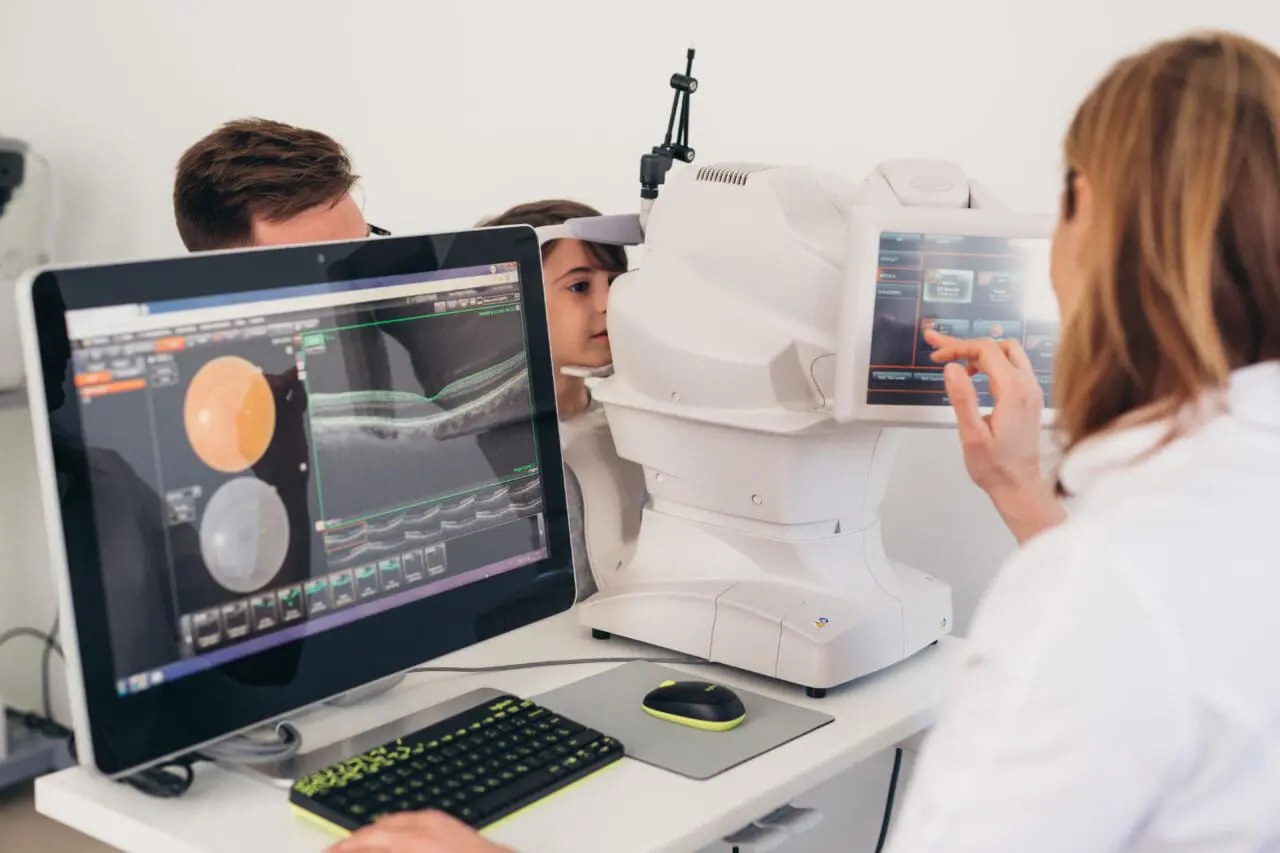
A new AI-based 60-second retina scanning tool can predict a person’s risk of heart disease by looking at the veins and arteries in their eye.
The test findings of the new Quartz tool, published in the British Journal of Ophthalmology, show that the AI software takes only 60 seconds to be able to tell if a person’s risk of cardiovascular disease, cardiovascular death, and stroke is higher than expected, and what level the risk is. The non-invasive AI tool arrives at its conclusions by analysing the total area of the retina covered by arteries and veins and their tortuosity/bendiness because these factors are known to be related to heart health.
In tests, the QUARTZ (“Quantitative Analysis of Retinal vessels Topology and siZe”) AI software’s risk level assessments were found to have “comparable performance” with the current Framingham Risk Score test’s (FRS) standard 10-year risk predictions.
The AI software was trained by the St George’s, University of London research using scanned images from 88,052 UK Biobank participants aged 40 to 69. It has been noted, however, that 96 per cent of these scan images were from white people and that this bias would need to be addressed to make the tool more accurate for different ethnicities.
If rolled out, e.g. given high street availability through opticians, the 60-second AI scanning tool would be a fast, fully automated, low-cost, non-invasive way to reach a higher proportion of the population. This could mean improved cardiovascular health in the UK, with saved lives through spotting problems early and then enabling appropriate treatments and medication to be given.
The idea of analysing retina scans to spot health problems is not new. For example, in 2018, an AI-based retina scanning tool for spotting diabetic retinopathy was approved in the US.
This story shows that AI has benefits not just for business but can be extremely useful in areas such as health due to its ability to carry out complex tasks quickly. This enables saving time and money and creating innovative new ways to deliver value-adding, accurate results in fully automated ways (freeing up other resources). The comparable performance of the QUARTZ AI tool with existing methods like FRS is very promising. Also, the fact that such a tool could be given high street availability could save many lives and is an example of how technology such as AI is transforming service delivery and outcomes in a way that can improve upon existing methods.
This website uses cookies to improve your experience. Choose what you're happy with.
Required for the site to function and can't be switched off.
Help us improve the website. Turn on if you agree.
Used for ads and personalisation. Turn on if you agree.
This website uses cookies to improve your experience. Choose what you're happy with.
Required for the site to function and can't be switched off.
Help us improve the website. Turn on if you agree.
Used for ads and personalisation. Turn on if you agree.